
10-Day Grand Morocco Tour
Duration
10 Days
Starting Location
Tangier
Ending Location
Marrakech
10 Days Tangier to Merzouga Desert Tours
Our 10 day grand Morocco tour is a private route we adapt to your dates and your pace. Bahma Tours’ 10-day point-to-point tour from Tangier to Marrakech explores Morocco’s coast, imperial cities, Sahara desert and High Atlas – from Chefchaouen and Volubilis via Fes and the Merzouga dunes through the south gorges to Ait Ben Haddou and Marrakech.
Why choose our 10 day grand Morocco tour
This is a point-to-point route, not a loop, so each driving day is forward, not retracing ground. It loads up the Roman and imperial sites of the north before the desert stretch, then meanders its way into Marrakech through the gorges and Ait Ben Haddou rather than speeding straight there from the Sahara – with complete rest days factored in at both Fes and Merzouga.
Tour Highlights
- The Strait of Gibraltar and the medina of Tangier. Europe meets Africa.
- Hercules Cave & Cap Spartel (where the Atlantic meets the Mediterranean)
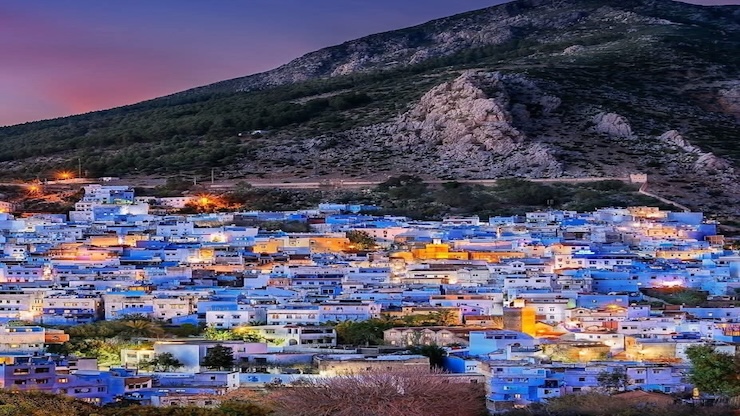
- Chefchaouen’s blue streets at golden hour
- Bab Mansour gate, Meknes and Volubilis, Morocco's best-preserved Roman ruins
- Fes el-Bali: Al-Qarawiyyin, Chouara tanneries & medina craft souks
- Alpine architecture in Ifrane and Barbary macaques in the cedar forest of the Middle Atlas
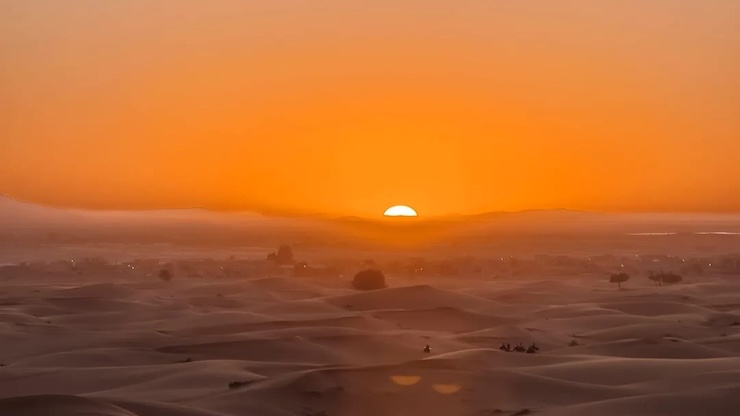
- Arrival: Ziz Valley palm oasis, sunset walk into the Erg Chebbi dunes
- Arrival: Ziz Valley palm oasis, sunset walk into the Erg Chebbi dunes
- Camel ride at sunrise and 4x4 trip to the khettara channels, oasis, seasonal lake, Khamlia and visit a nomad family
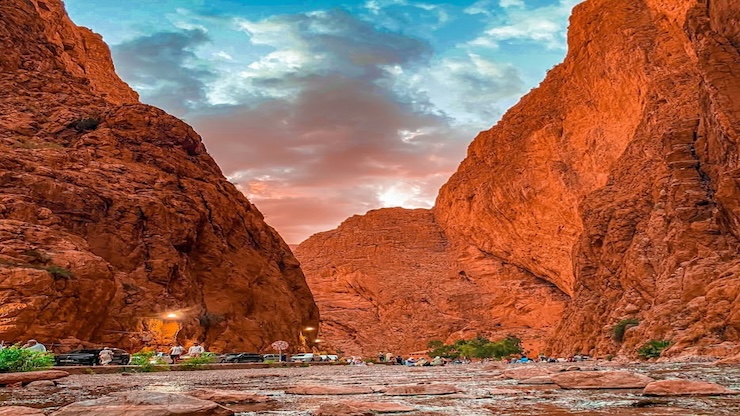
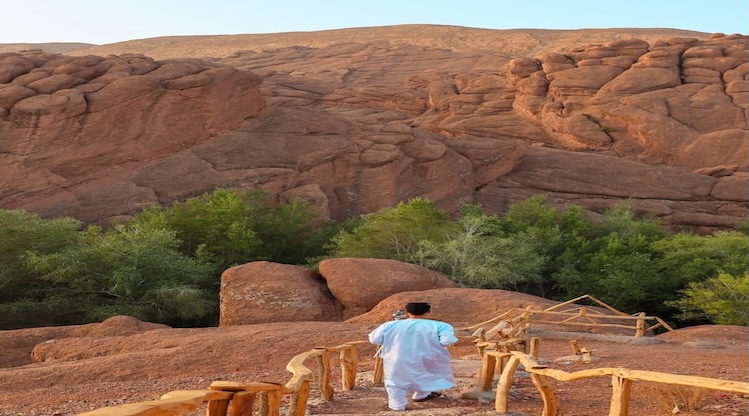
- Canyon walls of Todra gorge, switchback road of Dades gorge, rock formations
- Rose Valley, the film studios of Ouarzazate and the fortified kasbah of Ait Ben Haddou
- Crossing the pass of Tizi n'Tichka towards Marrakech
- Bahia Palace, Majorelle Garden and Jemaa el-Fnaa square by night
10-Days Morocco tour Itinerary
Day 1: Welcome To Morocco
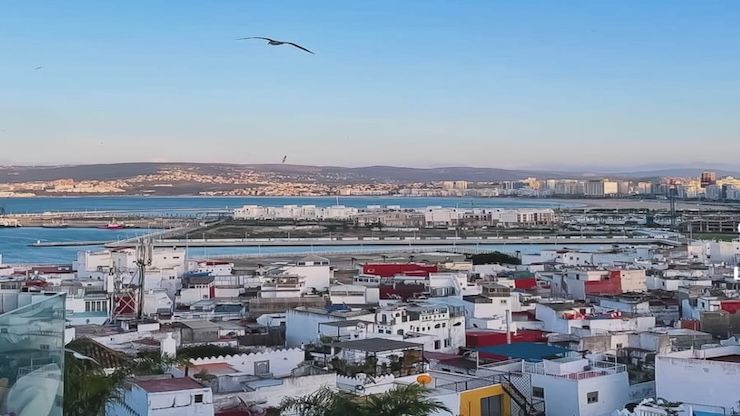
Most travellers arrive in Tangier by air to Ibn Battouta Airport, or by ferry across the Strait of Gibraltar from Tarifa or Algeciras in Spain. The ferry takes roughly 35-90 minutes depending on the type of ferry. Bahma Tours will organise a direct pick up from the Airport or Port so the morning is mostly taken up with arrival logistics and a first glimpse of Tangier’s harbour where Africa and Europe sit visibly close across the strait.
Noon: Check-in is followed by a deliberately open and unstructured midday. This is a settling-in window rather than a scheduled activity block, allowing travellers to recover from flights or overnight ferries before the tour’s driving days begin.
Afternoon: A gentle introductory walk near the hotel or along the Tangier waterfront is a good option for those who want to stretch their legs. You’ll get views over the port and, on clear days, the coastline of Spain across the water. Dinner is usually at leisure, and Tangier’s mix of Mediterranean and Moroccan food can be found in the city center.
Day 2: Tangier → Chefchaouen
Morning:
Start the day with a guided walk through the medina of Tangier, a smaller and less overwhelming introduction to Moroccan medina life than you will experience in Fes or Marrakech, with its narrow lanes, the Petit Socco square, and views over the harbour from the old Kasbah quarter.
Noon:
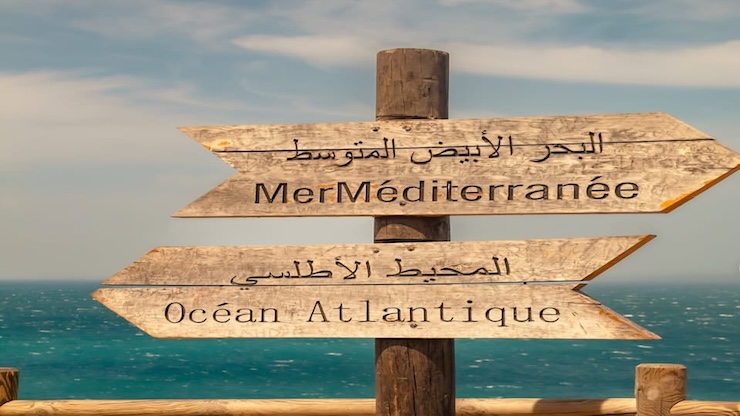
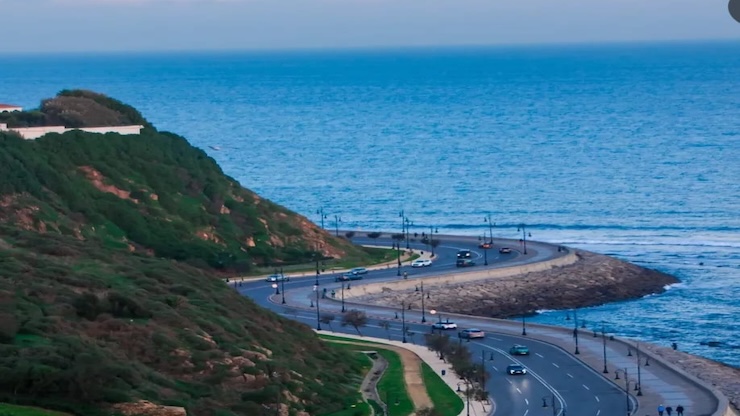
Leaving the medina the route heads towards Cap Spartel, the place where the Atlantic Ocean meets the Mediterranean Sea and where there is a lighthouse and magnificent coastal views – a natural place to stop for photos and to take a break before moving on.
Afternoon:
A brief stop at the Hercules Cave just below Cap Spartel, where legend has it the mythological hero Hercules sheltered in the sea-facing opening – well worth it for the rock formations and ocean views as much as the story. From there the drive heads inland and up into the Rif Mountains, arriving in Chefchaouen in the early evening, with time to see the blue-washed medina in the last light of the day.


Day 3: Chefchaouen → Volubilis → Meknes → Fes
Morning:
After a last look at the medina of Chefchaouen, the drive heads south out of the Rif Mountains and towards the plains around Meknes. This multi-hour stretch swaps the mountain scenery of the past two days for the agricultural heartland of central Morocco.
Noon:
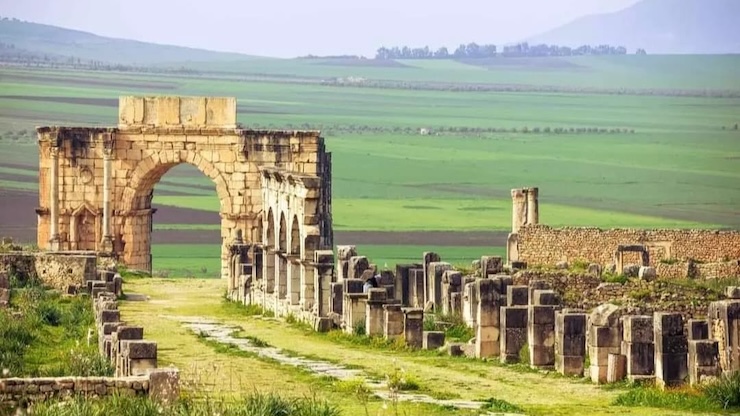
The day’s highlight is Volubilis, the best-preserved Roman ruins in Morocco and a UNESCO World Heritage Site, with mosaics, standing columns and the remains of a city that was once a regional Roman administrative center. A visit to the site usually takes an hour to an hour and a half, depending on pace and how much interest there is in the mosaic work that can still be seen in several of the old houses.
Afternoon:
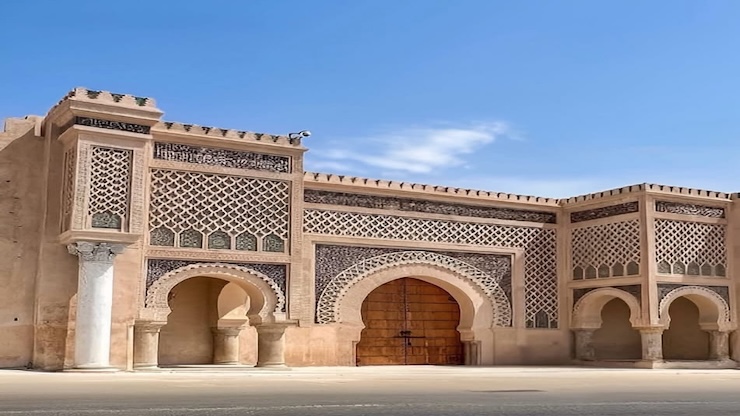
A short drive from Volubilis brings you to Meknes, one of Morocco’s four imperial cities and much quieter than Fes or Marrakech, with the monumental Bab Mansour gate and its wide, formal royal quarter. The route continues from Meknes to Fes for the overnight, arriving in the evening.

Day 4:All Day in Fes
Morning:
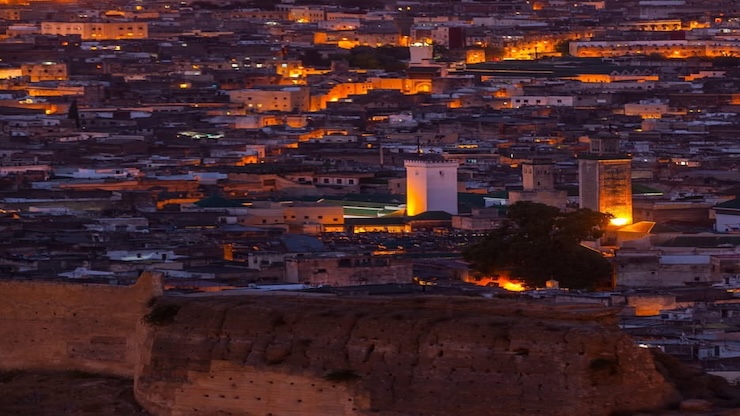
Walk with a local guide through Fes el-Bali, the old walled medina, one of the world’s largest car-free urban areas, and all but impossible to navigate independently on a first visit. The morning usually includes the Al-Qarawiyyin area, home to one of the world’s oldest continuously operating universities, and nearby historic madrasas.
Noon:
Midday, visit the tanneries district, where you can see the Chouara tanneries from surrounding terraces — leather has been processed here using traditional methods for centuries, and the view from above gives a clear sense of the dyeing pits and the scale of the trade.
Afternoon:
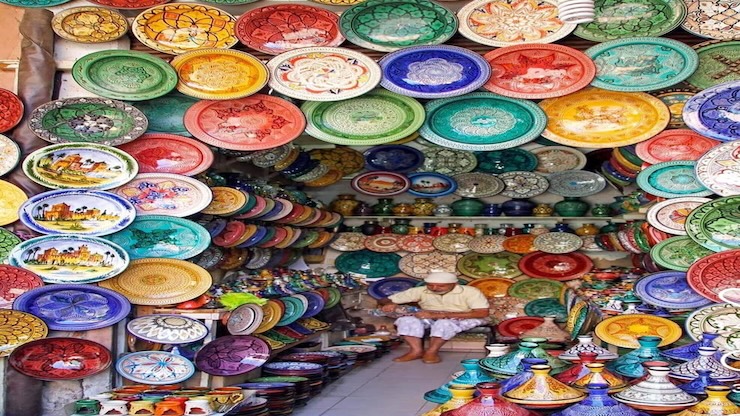
The afternoon is usually given over to browsing the souks, where there are several quarters dedicated to particular crafts – metalwork, ceramics, textiles and leather goods all have their own section of the medina. It is also a natural time for shoppers, as Fes is widely considered Morocco’s best city for traditional crafts. A day spent with time to rest before a long drive south the next day.


Day 5: Fes → Ifrane → Cedart Forest → Medelt→ Erfoud → Merzouga
Morning:
Departing Fes, the road climbs into the Middle Atlas, arriving at Ifrane, a town built in a European-alpine architectural style that earns it the nickname “Little Switzerland” — a notable contrast with the medina towns visited so far.
Midday:
A brief but memorable wildlife stop after Ifrane, as the road passes through Middle Atlas cedar forest, home to Barbary macaques often seen by the roadside, before continuing to Midelt, a mid-route town that provides a natural lunch and rest stop between the mountains and the pre-Saharan zone.
Afternoon:
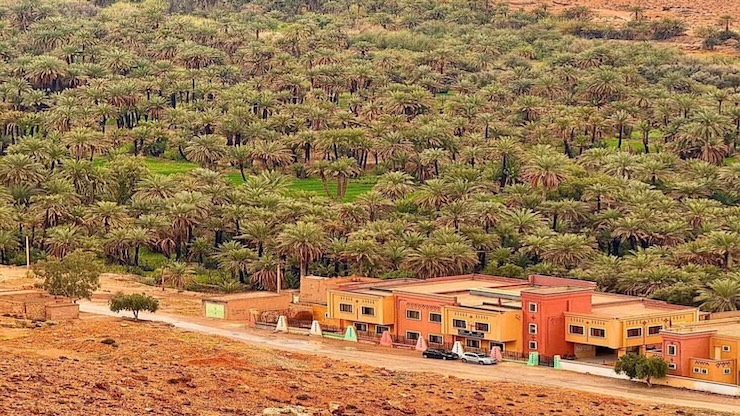
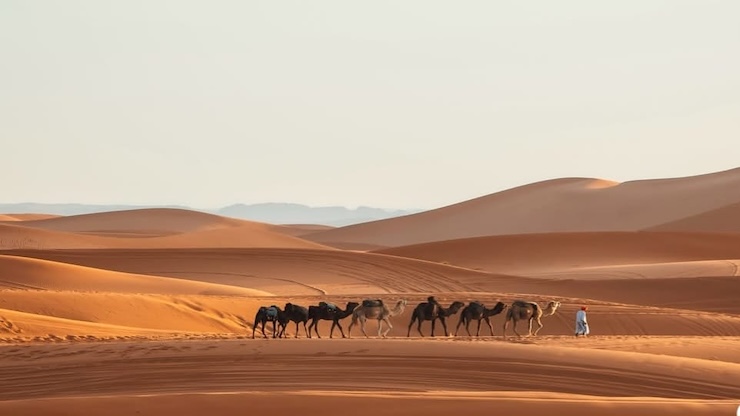
From Midelt, the road plunges into the Ziz Valley. Here, the road twists through a spectacular gorge before opening up to a huge oasis of palms along the Ziz River, one of the most beautiful stretches of driving on the whole route. When the group arrives at camp in Merzouga it’s been a long day on the road since leaving Fes, so most travellers don’t go straight out on a camel, but just walk out to the nearby dunes on foot to watch the sunset over Erg Chebbi — a shorter, easier way to unwind before dinner. The camel trek is left for the next morning when there is more energy for it.

Day 6: Merzouga Full Day
Morning:
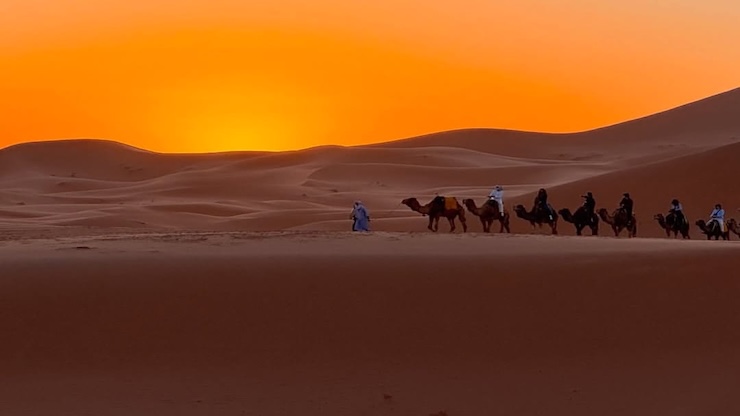
Most people begin the day with a camel trek out into the Erg Chebbi dunes, with the previous day’s drive behind them, to catch sunrise, before returning to camp for breakfast — the desert light at sunrise is generally considered the best time of day for both photography and temperature. After breakfast we turn to 4×4 vehicles for a bigger loop around the Merzouga area, starting with a visit to the local khettara system – the traditional underground irrigation canals that bring water from the water table to the palm groves – followed by a short walk into the oasis they feed.
12:00 PM:
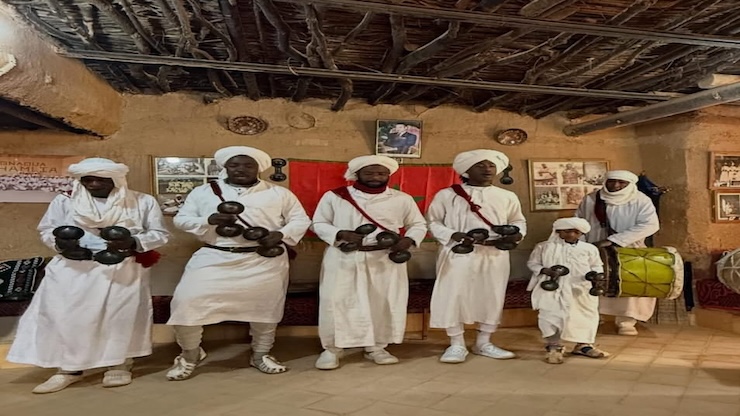
The 4×4 route continues to a seasonal lake (Dayet Srji) which fills up with water depending on rainfall and is home to flamingos and other migratory birds when the water level rises. From there the group makes its way to Khamlia, a village with a musical tradition of the Gnawa, originally brought by families of sub-Saharan descent. After a stop near the Mfis mining area, where small-scale mineral extraction has long been a part of the local economy, Lunch is Berber pizza (madfouna), a stuffed flat bread cooked in sand, usually at the home of a nomad family, as part of a visit that offers a hands-on look at daily desert life.
Afternoon:
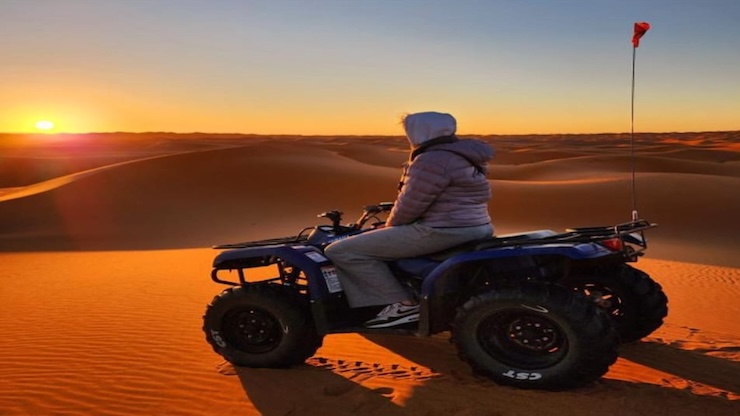
The afternoon is free and flexible – you can go out again on the camels, try a quad bike over the dunes or just walk the dunes closer to camp before returning for a second night in Merzouga.
Day 7: Merzouga → Erfoud → Tinjdad → Todra Gorge → Dades valey
Morning:
Following a last desert sunrise, the route heads to Erfoud, a town known regionally for fossil quarrying, then turns west for the gorges, a change from sand dunes to mountain and canyon terrain.
Noon:
The main stop of the day is Todra Gorge, a narrow limestone canyon with walls rising several hundred meters on either side of a shallow river. A favourite stop for short walks and for the more experienced travellers, rock climbing. The gorge is a recognised climbing destination.
Afternoon:
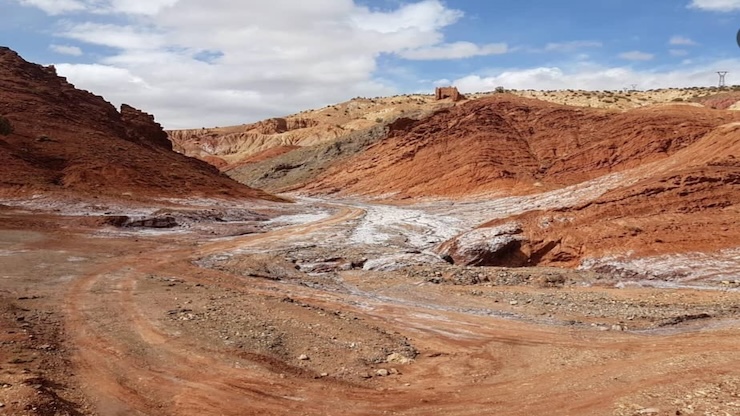
The road from Todra continues to Dades Gorge, with its switchback road and strange eroded rock formations sometimes called locally as “monkey fingers.” The overnight stop is usually in a guesthouse with views of the valley.
Day 8 : Dades Gorge → Rose Valley → Ouarzazate → Ait Ben Haddou → Marrakech
Morning :
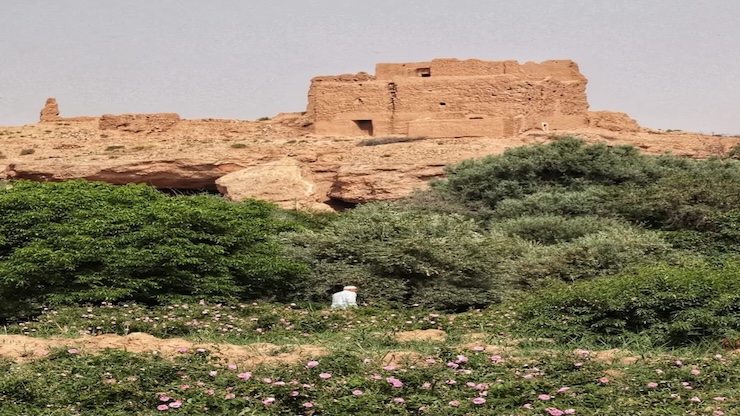
We continue along the so-called “Road of a Thousand Kasbahs” and pass through the Rose Valley. This is an agricultural area where roses are cultivated and, in season (usually spring), harvested for use in the production of regional rosewater and cosmetics.
Noon:
The road continues to Ouarzazate, sometimes called the gateway to the desert, known for its film studios, used in many international film and television productions because of the desert and kasbah scenery in the region.
Afternoon:
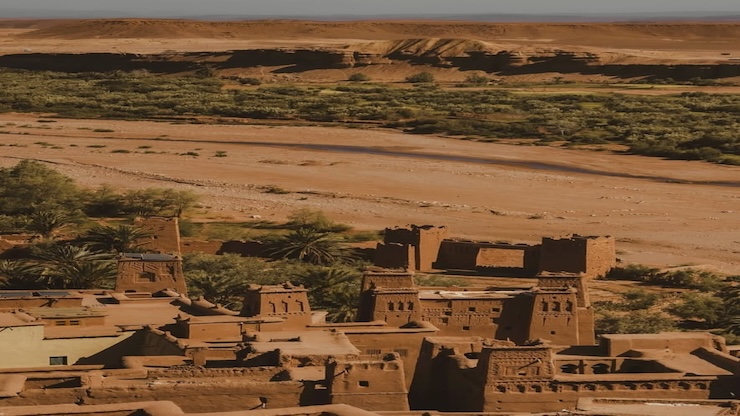
A short distance from Ouarzazate is Ait Ben Haddou, a UNESCO-listed fortified village (ksar) of earthen clay buildings, one of the best-preserved examples of traditional pre-Saharan architecture in Morocco. The final stretch of the drive takes you over the High Atlas Mountains via the Tizi n’Tichka pass, one of the highest mountain roads in North Africa, before descending into Marrakech by evening
Day 9: Discover Marrakesh
Morning:
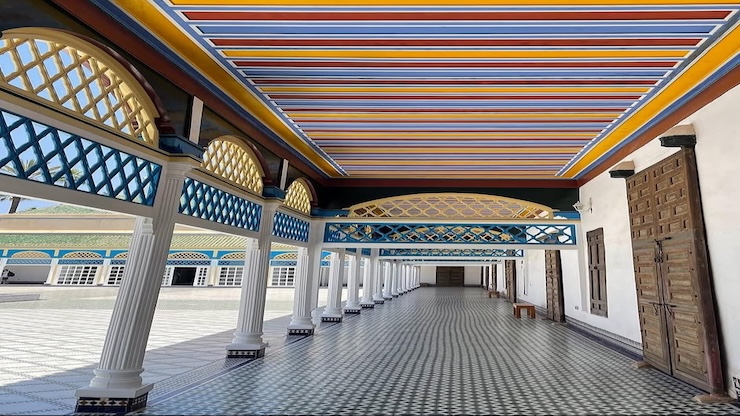
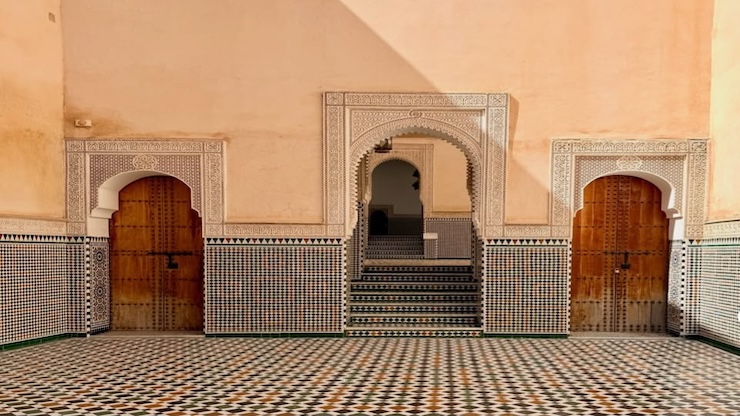
Start your day at Bahia Palace with its elaborate tilework, carved cedar ceilings and courtyard gardens, then visit the Saadian Tombs, a royal necropolis sealed off for centuries and only rediscovered in the early 20th century.
Noon:
Midday is a good window for the Majorelle Garden, a botanical garden of cacti and cobalt-blue structures originally created by French painter Jacques Majorelle and later restored by designer Yves Saint Laurent — a quieter, greener contrast to the density of the medina.
Afternoon:
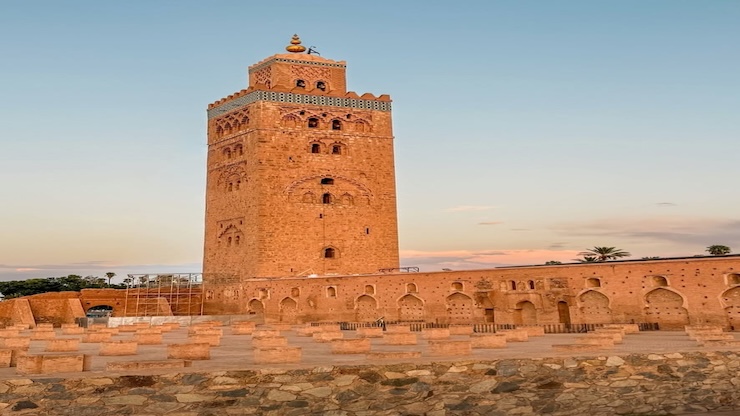
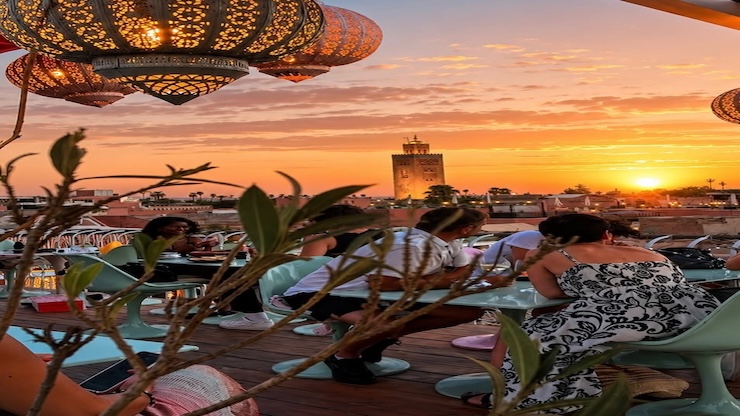
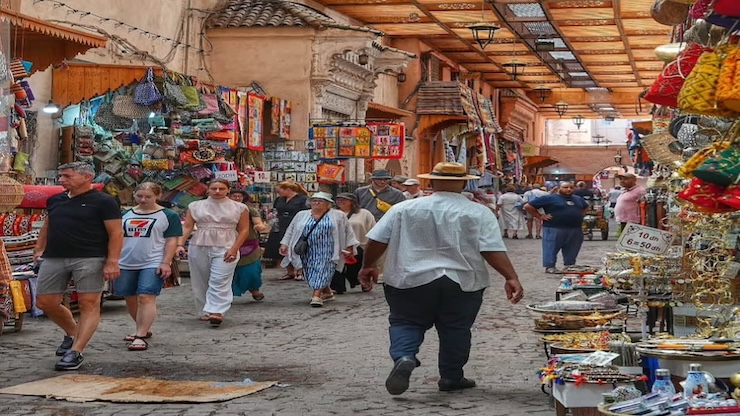
The afternoon and evening are generally spent in the medina itself, working through the souks for leather, spices, textiles and metalwork, before ending up in Jemaa el-Fnaa, the city’s main square, which changes character after dark as food stalls, musicians and storytellers set up for the evening.
Day 10: Departure
Morning: Depending on the time of your flight or onwards journey, you may have time for one last stroll through the medina or a nearby café before checking out.
Bahma Tours will organise the transfer to Marrakech Menara airport (or onwards transport) according to the traveler’s departure timetable.
Afternoon: Those with later flights can enjoy extra time to shop for last-minute gifts or enjoy a final meal in the medina before heading to the airport.
What’s Included & Excluded
What’s Included
- Pickup from the airport and transfer to the airport
- Private transport in a [ air-conditioned 4x4 / minivan]
- Professional English speaking driver
- Fuel, road charges
- Accommodation for 9 nights as per the program.
- Breakfast daily
- Dinner Days 5, 6 & 7
- Licensed local guide for Fes and Marrakech Medina
- Sunset Camel Ride in Erg Chebbi (1 Camel per Person)
Not Included
- Lunches and drinks
- Optional activities (quad biking, 4x4 excursions)
- Tips (optional but appreciated)
- Individual expenses
Useful information
- Best time to visit: March to May and September to November offer the most pleasant temperatures for the desert and mountain sections. July-August is very hot in Merzouga (often 40°C/104°F+). December-February brings cold desert nights.
- Weather: Desert days warm to hot depending on season; nights cold year-round, especially Nov–Feb. Pack them in layers.
- The camel excursion is roughly 45–60 minutes each way at a walking pace.
- Physical difficulty: Easy to intermediate. The tour is primarily vehicle-based with walking tours in the medinas and short hikes at the gorges; no technical hiking required.
- Don’t want to go camel riding? 4x4 or quads to the big duns for the sunset can be arranged.
- Who this is for: First time visitors to Morocco who want a comprehensive overview of the country in one trip – Imperial Cities, Sahara desert, mountain roads and Marrakech – rather than concentrating on just one area.
- The Tizi n’Tichka pass can be closed and snowy in winter, so check conditions if you are travelling December-February.
- Please mention any dietary needs when you book or just tell your driver on day one.
- Bring cash. small village stops and local lunch spots don’t take cards.
Booking
Ready for an unforgettable trip? Book now and pay later with ease! If you don’t hear from us soon, please feel free to contact us on WhatsApp at @@ we’re always here to help make your dream trip a reality.
Frequently Asked Questions
Is 10 days enough for Tangier to Marrakech including the desert?
Yes, the itinerary is sequenced to hit the north, the imperial cities, a full two nights in Sahara, and the southern gorges without doubling back, although Day 5 and Day 8 have long stretches of driving.
Why do we stop at Volubilis and Meknes before we go to Fes?
The detour adds Roman ruins and a quieter imperial city to the trip with not a lot of extra driving time, since Volubilis and Meknes are right on the way between Chefchaouen and Fes.
Is this tour suitable for families or first time visitors to Morocco?
Yes. The pace is moderate, most sites are short walks rather than technical hikes and the route includes a representative mix of cities, desert and mountains making it a solid option for both families and first-time visitors.
How hard is it to drive from Fes to Merzouga?
It’s the longest driving day on the itinerary but it’s broken up into stages – Ifrane, the cedar forest, Midelt and the Ziz Valley – each of which offers a stop, so it doesn’t feel like one long continuous drive.
Can I add extra nights in Marrakech or Fes ?
Yes, this is a private tour and not a fixed departure group tour so you can add extra nights or change the schedule directly with Bahma Tours.
Sahara nights how many?
You’ll spend two nights in the Merzouga area, walking out to the dunes for sunset on arrival. On the second day there is a sunrise camel trek, a 4×4 excursion around the local villages and oasis and a free afternoon before heading back to camp.
Do you need to have experience to ride a camel into the dunes?
No experience necessary. You check in at camp by vehicle and then camels take you into the dunes for sunset at a slow guide led walking pace before returning to camp.
Do I really need two nights in the Sahara?
One night gets you the sunset camel ride and that’s about it. The khettara walk, the Gnawa visit in Khamlia and the nomad family tea all take place on the second day – arguably the more memorable half of the desert stay.
Does this route cover Ait Benhaddou and the Todra Gorge?
Yes to both of these. Todra Gorge is a stop on the way into Dades on Day 3. Day 4: Full visit to Ait Benhaddou, between Ouarzazate and the ascent to the High Atlas.
What do I really need to pack?
Layers, in particular – a warm layer for desert nights, something light for the heat of the day, and closed shoes for the walk in the oasis and the uneven paths of Ait Benhaddou. A headlamp and camera complete the basics.
How does the desert camp look?
You’ll sleep in a traditional Berber tent with real beds.[Standard/Superior/Luxury] camps have [shared/private] bathroom facilities – please advise your operator of your preference when booking.
What to wear on a desert tour in Morocco?
Light layers for the day, warm layer for cold desert nights, comfortable walking shoes, sunglasses, sunscreen, hat…
Do you want to ride a camel out into the dunes?
No experience required. You arrive at the camp by vehicle. You ride camels to the dunes for sunset at a slow, walking pace led by a guide, and return to camp. If you don’t want to ride, you can ask if there are other options for the sunset excursion.
Do you have vegetarian/vegan options?
Yes – just say so when booking or tell your driver/guide on the first day.
A sleeping bag is not required for the desert at night.
No – the camps have full bedding, even in the standard tents.
How to book and pay?
Your booking is secured with a small deposit, the balance will be paid in cash at pickup (euros, US dollars or dirhams) Full PayPal payment available with a 5% fee.