
6 day Morocco tour
Duration
6 Days
Starting Location
Casablanca
Ending Location
Marrakech
Casablanca to Marrakech 6 day desert tour
Our 6 days Casablanca to Sahara is a private tour with local drivers who know the roads well. Six days doesn’t leave a lot of room for detours, but this route makes deliberate choices about where the time goes: a full day set aside for Fes instead of a quick pass through, one proper night in the Sahara at Merzouga, and a steady run south through Erfoud, Todra Gorge, Dades Gorge and Ait Ben Haddou before finishing in Marrakech. There is no filler here, every stop deserves a place on such a packed schedule.
Why choose our 6 days Casablanca to Sahara
This route is based on roads and stops we actually drive and guide in person, with realistic timing built in for the longer driving days. This is from experience on this circuit, not cobbled together from other sites.
“Written by Brahim, a Morocco-based guide/Driver who has led this route for 10 years.”
Trip Highlights:
- Hassan II Mosque, on the way out of Casablanca rather than squeezed in as an afterthought
- See the imperial landmarks of Rabat, like the Hassan Tower and Mausoleum of Mohammed V
- Volubilis, roman ruins with mosaics still visible in open air.
- A full day to truly explore Fes el Bali, the largest car-free urban area in the world, and home to centuries-old tanneries and madrasas
- The cedar forest of the Middle Atlas, where wild Barbary macaques wait for you along the road.
- The Ziz Valley – one of the most scenic drives in the country.
- A night in the Sahara with sunset camel trek and dinner under the stars at camp.
- Erfoud’s fossil trade, a stop that most short itineraries skip altogether.
- Todra Gorge and Dades Gorge, back to back on the way south.
- Rose Valley and Ait Ben Haddou (UNESCO World Heritage Kasbah) en route to Marrakech.
6 Days Itinerary Casablanca to marrakech
Day 1: Arrival in Casablanca
Morning/Noon:
The flight schedule is a bit all over the place on this trip so this part of the day just moves around whenever you get here. A driver meets you at the airport and takes you directly to your hotel. There is no fixed arrival itinerary, just a smooth transition from plane to car to check-in.
Afternoon:
Once you’re settled, there’s not a whole lot pushed into today on purpose. If you still have the energy after the flight, a short walk around the hotel is enough to get a first impression of the city – the traffic, the mix of old and new architecture, the overall pace of Casablanca compared to what is to come later on the trip. “Otherwise just a short break until tomorrow’s longer day starts.”
Practical tip: If your flight arrives early enough, ask your driver if you have time to visit the Hassan II Mosque today rather than tomorrow. It all depends on your arrival time and the traffic for the rest of the day.

Day 2: Casablanca → Rabat → Volubilis → Fes
Morning:
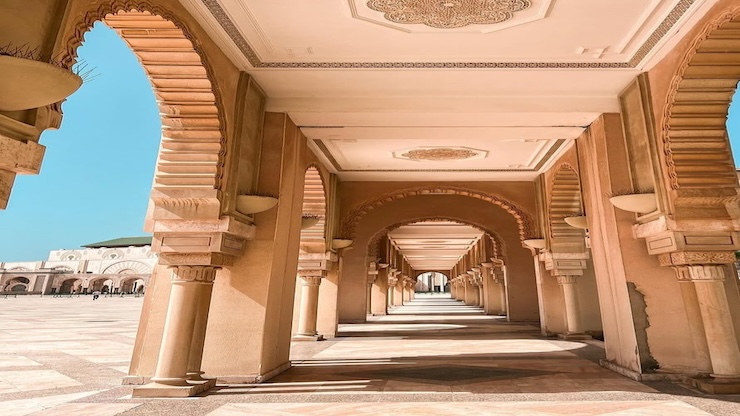
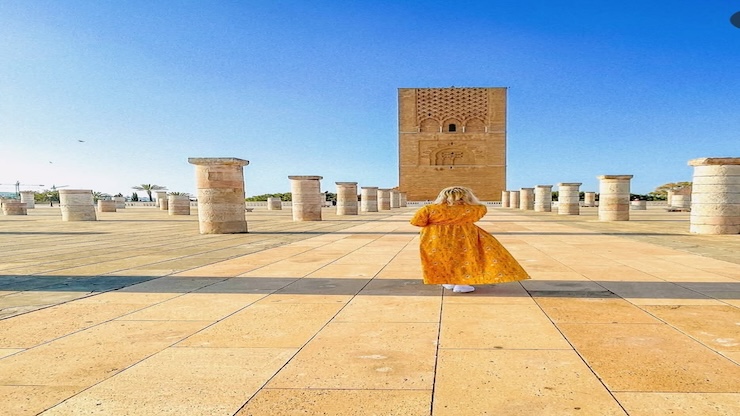
The day starts with a visit to the Hassan II Mosque, located on the Atlantic coast and one of the few mosques in Morocco that non-Muslim visitors can enter. Photographs alone are not enough to appreciate its size. The minaret is one of the world’s tallest religious structures and the interior with its retractable roof and marble floors is worth the stop even for those travellers who are not normally attracted to religious architecture. The drive continues from Casablanca to Rabat, where the Hassan Tower and the adjacent Mausoleum of Mohammed V are located on the grounds of a mosque that was never completed, a quieter, more contained stop than the mosque you just left.
Noon:
Lunch is usually taken on the way east, and the drive continues towards Volubilis. This Roman archaeological site is located in open farmland just outside of Meknes, and the mosaic floors remain where they were originally laid—no glass cases, no roped-off distance, just centuries-old artwork sitting out in the open air.
Afternoon:
The day ends with the final push into Fes. We usually get in late afternoon, just enough time to check in, have dinner and rest before a full day of exploring the medina tomorrow – Fes rewards a clear head and comfortable shoes, so an early night tonight makes a real difference.
Practical tip: Wear comfortable shoes for Volubilis, the ground is uneven stone with very little shade, especially rough at midday.

Day 3: Full Day In Fes
Good morning:
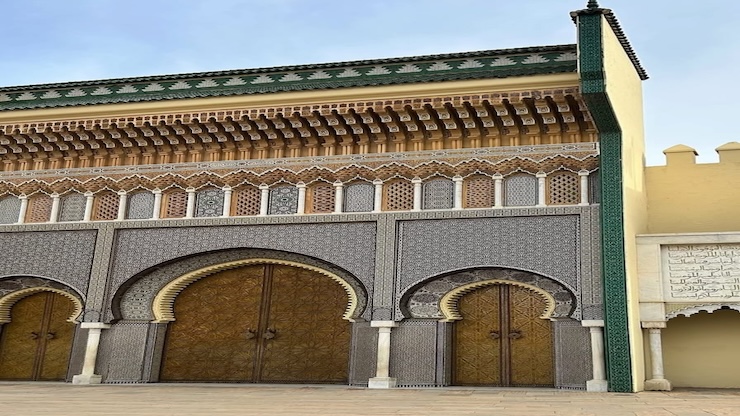
The day begins outside the gates of the Royal Palace. You can’t go in, but the size of the bronze doors and the detail in the zellige tilework surrounding make it worth a stop anyway. From there, it’s a short drive up to a hillside viewpoint that overlooks the city, and does more to explain Fes than any map could – the medina spreads out below in a dense, tangled mass of rooftops with almost no visible streets, since most of them are too narrow to see from above.
Noon:
Before entering the medina itself you stop at a traditional ceramics workshop where the famous blue pottery of Fes is shaped on the wheel, glazed and hand-painted by artisans who have worked the same techniques for generations. Lunch is usually close by, often at a rooftop restaurant, which gives you yet another elevated view of the medina before you go into it.
Afternoon:
The rest of the day is spent on foot with a local guide, walking through Fes el Bali – the old walled medina and the largest car-free urban area anywhere in the world. You’ll pass through Bab Boujloud, the ornate blue-and-green gate marking the start of the old city, then head past the Chouara Tannery, where hides are still dyed by hand in stone vats using centuries-old methods, through the Al-Qarawiyyin quarter, home to one of the oldest continuously operating universities in the world, and into the finely carved interior of the Bou Inania Madrasa.
Practical tip: The Fes medina has thousands of alleys and almost no signage a visitor can use – a local guide is not a luxury here, but what saves the day from becoming hours of backtracking.


Day 4: Fes → Ifrane → Cedar Forest → Ziz Valley → Merzouga Sahara
Good morning:
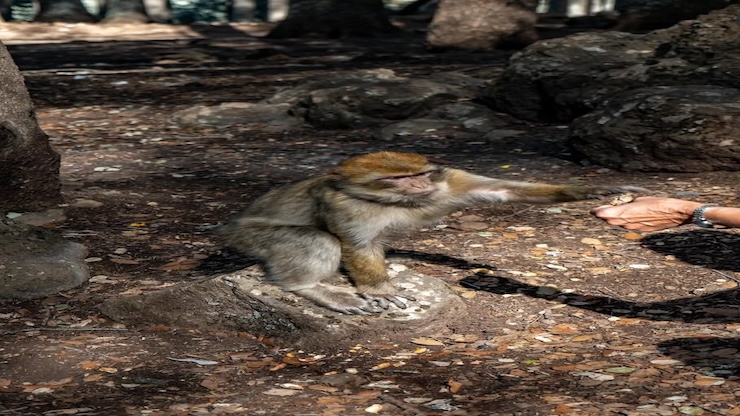
We have a lot of ground to cover today and so start early, usually around 7 or 8 AM. The road first climbs through Ifrane, a town that looks almost transplanted from the Alps, with sloped rooftops and a cool climate that earned it the nickname “Little Switzerland.” Then the route dives into the Middle Atlas cedar forest near Azrou, where wild Barbary macaques are almost always visible right alongside the road – close enough, most days, that you don’t even have to get out of the vehicle for a good look.
Midday:
Midelt is the natural lunch stop, a quiet town surrounded by apple orchards and one of the last places to easily stock up on water before the landscape turns properly remote.
Good afternoon:
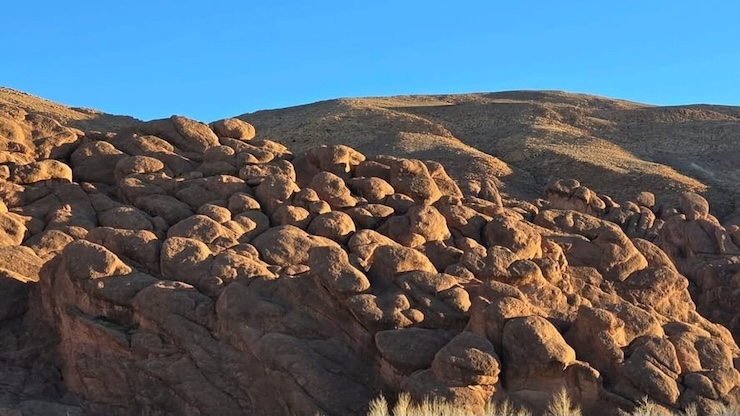
After Midelt the road drops into the Ziz Valley – a long green corridor of palm groves set against red rock canyon walls and truly one of the best drives in the whole country no matter how many times you’ve done it. You arrive in Merzouga late afternoon and there is no stop in town first as the desert camp is right on the edge of the dunes. You arrive, drop your bags in your tent and within the hour you are on a camel heading out towards the dunes to watch the sunset turn the sand orange and gold. Back at camp, dinner is accompanied by Berber drumming around the fire, and a sky that is truly full of stars, away from any city light.
Practical tip: Bring a scarf or shesh for the camel trek to keep blown sand out of your face; and pack a warm layer for the evening


Day 5: Merzouga → Erfoud → Todra Gorge → Dades Gorge
Morning:
The drive west after watching the sunrise light up the dunes starts with a stop in Erfoud, a town that runs on the fossil trade rather than tourism. Here, much of the polished black marble sold throughout Morocco – the kind with visible traces of ancient marine life – is cut and finished, and a quick visit to a local workshop shows the entire process, from raw stone slab to the finished bowls and tabletops sold in shops further north.
Noon:
The road continues on towards Tinghir and Todra Gorge, where canyon walls rise nearly 300 meters above a narrow river that’s been carving into the rock for thousands of years. It’s a popular rock climbing destination, but even without gear, walking along the riverbed below those sheer walls is a pleasant way to stretch the legs after a morning in the vehicle. Lunch is usually by the riverside, in one of the cafés with tables right down at water’s edge.
Night:
The road into Dades Gorge twists past mudbrick Kasbahs perched on the cliffs in what is often called the ‘Valley of a Thousand Kasbahs’. The Dades road itself is one of the most photographed stretches of road in the entire south, with its tight, stacked switchbacks climbing up the wall of the valley. Overnight in a Kasbah Style guesthouse, with switchback views often visible right from the terrace.
Pro tip: If you get motion sickness on twisty roads, brace yourself for the Dades switchbacks – sitting up front usually helps.


Day 6: Dades Gorge → Rose Valley → Ouarzazate → Ait Ben Haddou → Marrakech
Good morning:
The day begins in Kelaat M’Gouna, gateway to Morocco’s Rose Valley. Here, fields of Damascus roses are grown each spring and harvested for rose water and rose oil — an industry that’s defined the local economy here for generations. If it’s the spring harvest, it’s worth pulling over for the fields themselves, not just snapping photos from the road.
Noon:
The road then leads to Ouarzazate, often called the “Door of the Desert” and famous throughout Morocco as the country’s film industry hub. Lunch is in town, then maybe a visit to the Atlas Film Studios if time allows, where on the grounds the sets and props of major international productions are sometimes still standing.
Afternoon:
Outside Ouarzazate, the day’s highlight Ait Ben Haddou, a UNESCO World Heritage fortified village, with cluster of earthen towers looming over the Ounila River, with more film credits than most working actors. The narrow lanes give a much closer view of the mudbrick construction than any photo taken from the road below. From there the road climbs the Tizi n’Tichka Pass, over 2,200 meters through the High Atlas Mountains, with switchbacks and long mountain views the entire way, before finally dropping down into Marrakesh by evening, closing out the trip.
Practical: It’s one of the longest driving days of the trip, so leaving Dades Gorge early makes a huge difference to how relaxed the pace feels by the time you get to Ait Ben Haddou.


What’s Included & Excluded
What’s Included
- Pickup from the airport and transfer to the airport
- Private transport in a [ air-conditioned 4x4 / minivan]
- Professional English speaking driver
- Day 3: Local licensed guide for Fes medina
- Fuel, road charges
- 5 nights accommodation as per itinerary
- Breakfast daily
- Dinner Day 4 and Day 5
- Sunset Camel Ride in Erg Chebbi (1 Camel per Person)
Not Included
- Lunches and drinks
- Optional activities (quad biking, 4x4 excursions)
- Tips (optional but appreciated)
- Individual expenses
Useful information
- Best time to visit: March to May and September to November offer the most pleasant temperatures for the desert and mountain sections. July-August is very hot in Merzouga (often 40°C/104°F+). December-February brings cold desert nights.
- Good for: Those short on time who want an authentic Sahara desert night and a full day in Fes, instead of rushing through one or the other.
- Physical difficulty: Easy to intermediate. The tour is primarily vehicle-based with walking tours in the medinas and short hikes at the gorges; no technical hiking required.
- The camel excursion is roughly 45–60 minutes each way at a walking pace.
- The Tizi n’Tichka pass can be closed and snowy in winter, so check conditions if you are travelling December-February.
- Weather: Desert days warm to hot depending on season; nights cold year-round, especially Nov–Feb. Pack them in layers.
- Don’t want to go camel riding? 4x4 or quads to the big duns for the sunset can be arranged.
- Please mention any dietary needs when you book or just tell your driver on day one.
- Bring cash. small village stops and local lunch spots don’t take cards.
Booking
Ready for an unforgettable trip? Book now and pay later with ease! If you don’t hear from us soon, please feel free to contact us on WhatsApp at @@ we’re always here to help make your dream trip a reality.
Frequently Asked Questions
I am planning a trip to Morocco and would like to know if 6 days is enough time to see Fes and the Sahara from Casablanca?
Yes, but a short one. Six days allows for a full day in Fes, one night in the Sahara, and the southern gorges and Kasbahs on the way to Marrakech. But it does mean a couple of long driving days to make that happen.
Which day has the most driving?
Day 6: Dades Gorge to Marrakech via Rose Valley, Ouarzazate, Ait Ben Haddou and Tizi n’Tichka Pass This is one of the longest driving days – in our experience it’s a stretch that travellers comment on, covering quite a lot of ground, with a few stops en route.
Is this tour suitable for families or first time visitors to Morocco?
Yes. The pace is moderate, most sites are short walks rather than technical hikes and the route includes a representative mix of cities, desert and mountains making it a solid option for both families and first-time visitors.
Why a single night in the Sahara on this itinerary?
In total six days, with a day full in Fes, and a night in the desert is just about right for this trip. If you want the full two-night desert experience, including the oasis walk and a visit to a nomad family, look for a 9-day or longer version of this itinerary.
Is this tour a whole day in Fes?
Yes – Day 3 is all about Fes with the Royal Palace gate, a ceramics workshop and a guided walk through Fes el Bali, so the medina gets all the time it deserves despite the short overall length of the trip.
Can I start or end this itinerary in a different city?
This version starts in Casablanca and finishes in Marrakech which is good if you are doing an open jaw flight. Depending on your flight arrangements it can also be adjusted to loop back to Casablanca instead.
Do I really need two nights in the Sahara?
One night gets you the sunset camel ride and that’s about it. The khettara walk, the Gnawa visit in Khamlia and the nomad family tea all take place on the second day – arguably the more memorable half of the desert stay.
Does this route cover Ait Benhaddou and the Todra Gorge?
Yes to both of these. Todra Gorge is a stop on the way into Dades on Day 3. Day 4: Full visit to Ait Benhaddou, between Ouarzazate and the ascent to the High Atlas.
Fes to Merzouga drive - How far is it?
The drive from Fes to Merzouga takes approximately 6-7 hours in each direction, covering about 280 km one way through the Middle Atlas Mountains and the Ziz Valley.
What do I really need to pack?
Layers, in particular – a warm layer for desert nights, something light for the heat of the day, and closed shoes for the walk in the oasis and the uneven paths of Ait Benhaddou. A headlamp and camera complete the basics.
How does the desert camp look?
You’ll sleep in a traditional Berber tent with real beds.[Standard/Superior/Luxury] camps have [shared/private] bathroom facilities – please advise your operator of your preference when booking.
What to wear on a desert tour in Morocco?
Light layers for the day, warm layer for cold desert nights, comfortable walking shoes, sunglasses, sunscreen, hat…
Do you want to ride a camel out into the dunes?
No experience required. You arrive at the camp by vehicle. You ride camels to the dunes for sunset at a slow, walking pace led by a guide, and return to camp. If you don’t want to ride, you can ask if there are other options for the sunset excursion.
Do you have vegetarian/vegan options?
Yes – just say so when booking or tell your driver/guide on the first day.
A sleeping bag is not required for the desert at night.
No – the camps have full bedding, even in the standard tents.
How to book and pay?
Your booking is secured with a small deposit, the balance will be paid in cash at pickup (euros, US dollars or dirhams) Full PayPal payment available with a 5% fee.