
6 Days Tangier to Marrakech
Duration
6 Days
Starting Location
Tangier
Ending Location
Marrakech
6 Days Across Morocco
Our 6 days full itinerary from Tangier to Marrakech is a private trip with a local driver-guide and a flexible pace. Bahma Tours’ 6-day Tangier to Marrakech tour is a shortened version of the classic north to south crossing – Chefchaouen, Fes, the Merzouga dunes, the southern gorges and Ait Ben Haddou, ending in Marrakech in under a week. It is for travellers who want to see the complete Moroccan landscape but don’t have 10 days to spare.
Why choose our 6 days full itinerary from Tangier to Marrakech
Six days means cutting the stops that add distance without adding a different kind of scenery—this route skips the Roman ruins and secondary imperial cities to focus on one core experience per region: one medina city in the north (Chefchaouen), one full city visit (Fes), one desert stay (Merzouga), and one mountain-and-kasbah stretch on the way into Marrakech. It’s a more intense schedule with less down time than a two-week trip, but it still hits the desert and the Atlas Mountains instead of just sticking to the cities, which is the main compromise that travellers are making when they opt for six days over ten.
6-Day Tangier to Marrakech Route Highlights
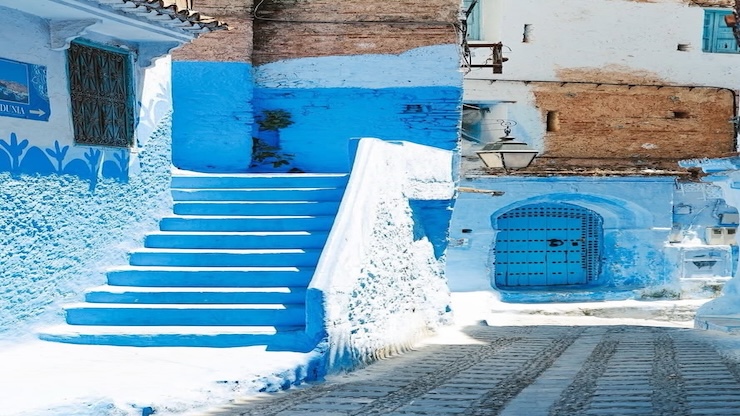
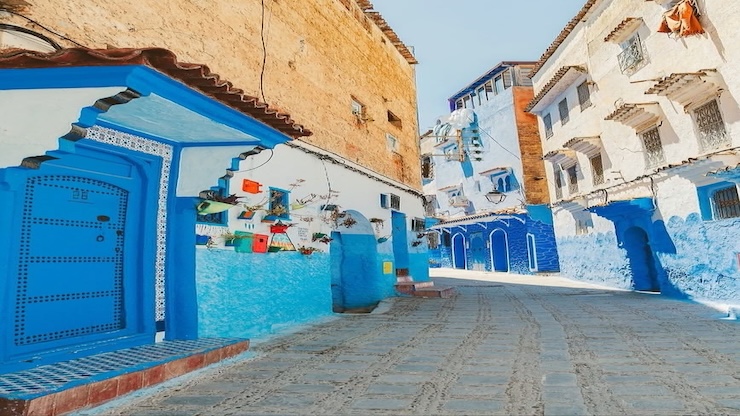
- Chefchaouen, the blue-painted medina of the Rif Mountains.
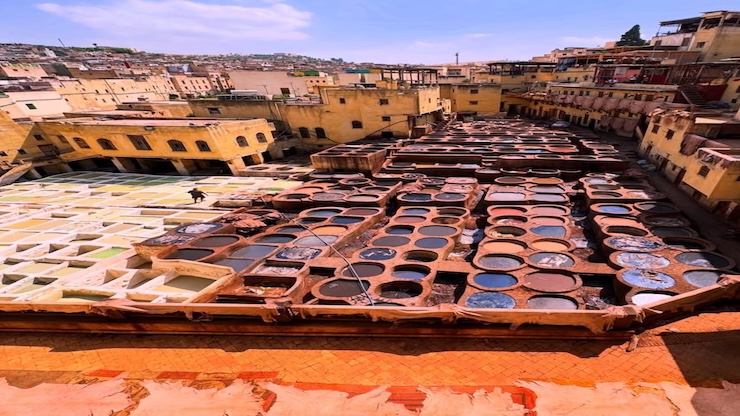
- Explore Fes el Bali, the largest car-free urban area in the world, and home to centuries-old tanneries and madrasas
- Travel through the Middle Atlas via Ifrane and the cedar forests of Azrou, home of the Barbary macaques in the wild
- Drive the Ziz Valley and Ziz Gorges, a dramatic canyon road lined with palms that leads to the pre-Sahara.
- Two nights in the Sahara including sunset camel trek and full day exploring the oasis, Khamlia's Gnawa music and visit to a nomad family
- Todra Gorge and the switchbacks of the Dades Valley, two of Morocco's most dramatic canyon roads
- Kelaat M'Gouna rose valley and Ait Ben Haddou, a Kasbah and emblematic film location, listed by UNESCO
- Ait Ben Haddou, a UNESCO World Heritage Kasbah and one of the most filmed locations in the country
- A full day in Marrakech, from Jemaa el-Fna to the souks and gardens of the medina
6 Days Itinerary Tangier to marrakech
Day 1: Tangier → Chefchaouen
Morning:
Direct pickup from Tangier airport or your accommodation. No stops in Tangier are planned on this shorter itinerary, the route heads directly into the Rif Mountains towards Chefchaouen. The drive takes about two hours, climbing steadily as the coastal flatlands give way to mountain terrain.
Noon:
Getting to Chefchaouen will usually be around noon, so you’ll have the rest of the afternoon to check into a riad and begin exploring the medina at your own pace, not a mad dash into a guided walk.
Afternoon:
Late in the day, the walk up to the Spanish Mosque is the natural way to wrap up day one. It’s a hillside viewpoint above the town, looking directly down over Chefchaouen’s blue rooftops, timed to catch sunset over the medina and the surrounding Rif peaks.

Day 2: Chefchaouen → Fes
Morning:
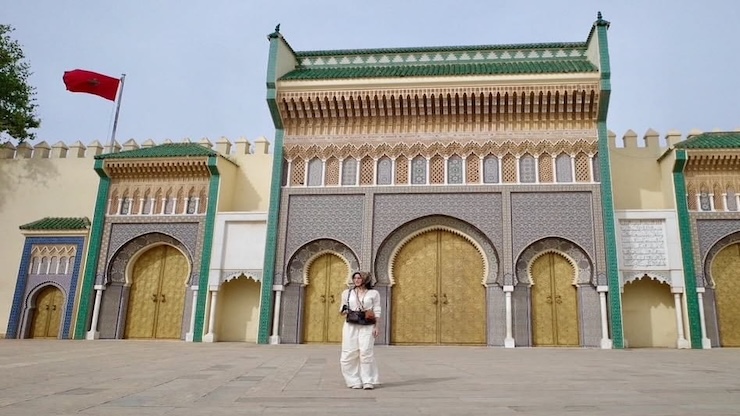
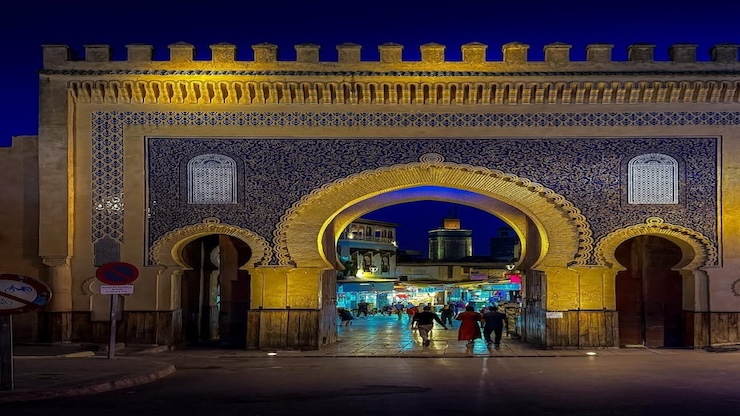
After breakfast, the drive continues south towards Fes, leaving the mountains behind for the plains and agricultural land that lead into the Fes-Meknes region. Upon arrival, the day begins with a guided city tour starting at the gate to the Royal Palace (Dar al-Makhzen) with its famous brass doors and intricate zellige tilework (the palace itself is not open to the public).
Noon:
The guide takes the group from the gate of the palace to a viewpoint overlooking the Fes medina. This is a good place to get orientated before heading into the old city itself. The layout of Fes el-Bali is dense enough that it makes it easier to have a wide view to place the walk that follows. Then visit a ceramics workshop to see the traditional hand-painting and glazing of Fassi pottery.
Afternoon:
Proceed with the walking tour into the medina, moving towards the Chouara tanneries, observed from a terrace overlooking the dyeing pits and traditional leather-processing methods. The exterior architecture and surrounding madrasas are the last stop of the guided walk before free time in the evening. The route ends near the Al-Qarawiyyin area, which is one of the oldest continuously functioning universities in the world.
.
Day 3: Fes → Ifrane → Cedar Forest → Midelt → Ziz Valley → Merzouga
Morning:
Leaving Fes, the road climbs into the Middle Atlas and arrives at Ifrane, a town built in a European-alpine style that is architecturally different from the medina towns visited earlier in the trip.
Noon:
After Ifrane the road passes through Middle Atlas cedar forest, where Barbary macaques are often visible close to the roadside, before heading towards Midelt, a natural lunch stop between the mountains and the pre-Saharan landscape that lies ahead.
Afternoon:
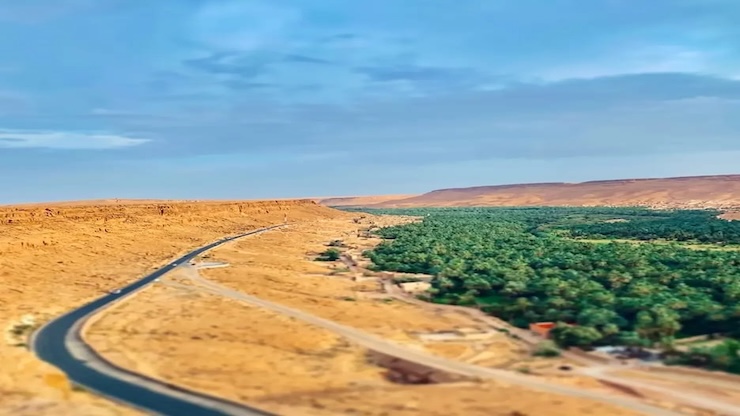
From Midelt the route descends through the Ziz Valley, along a gorge that opens into a long palm oasis, along the Ziz River – one of the more dramatic stretches of driving on the route. On arrival to the desert camp you are greeted with a glass of traditional mint tea before settling into your tent. After a short rest camels are ready to take you out towards the dunes to watch one of the most beautiful sunset of the trip over Erg Chebbi, before heading back to camp for dinner. The evening is spent round the fire listening to traditional Berber music and dancing, under a sky filled with stars far from city lights.


Day 4: Merzouga → Erfoud → Todra Gorge → Dades Gorge
Morning:
After breakfast at camp most travellers will take one more short walk into the dunes to catch the desert in its early morning light before the heat sets in, then it’s back into the vehicle to leave Merzouga. First stop is Erfoud, a town that is closely connected to Morocco’s fossil trade. The rock beds around Erfoud are filled with marine fossils that date back millions of years, and there are a number of local workshops that cut and polish them into tabletops, sinks and decorative pieces, giving a quick peek at an industry that is unique to this part of the country.
Noon:
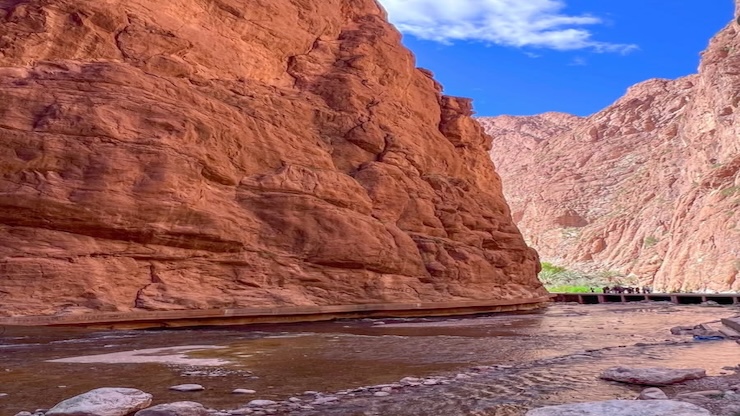
The road heads west out of Erfoud and the scenery changes noticeably, from the flat sand seas of the Sahara to the rising rock walls of the Atlas foothills. For our main stop today we head to Todra Gorge. A narrow river has cut a canyon with high limestone walls on either side, hundreds of meters high, so narrow that the road and riverbed are in the same tight passage in some places. You can take a walk along the canyon floor. Todra is a popular rock climbing destination in Morocco for those travellers who are interested in climbing, with routes fixed right into the gorge walls.
Afternoon:
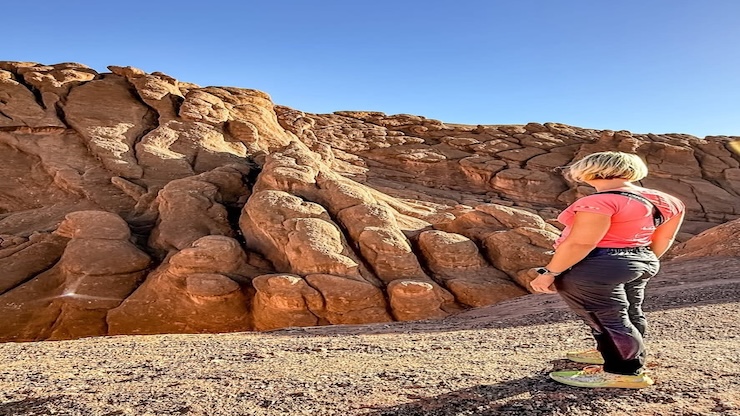
Leaving Todra, the drive continues to Dades Gorge, a valley famous for its switchback road that climbs the hillside in tight loops, and for the strange rock formations along the way – known locally as “monkey fingers” for their eroded, finger-like shape. The valley floor is scattered with kasbahs and small Berber villages built into the terraced hillsides and the overnight guesthouse is usually sited to take in these valley views with dinner often served with the gorge in view from the terrace as the light fades.
Day 5: Dades Gorge → Rose Valley → Ouarzazate → Ait Ben Haddou → Marrakech
Morning:
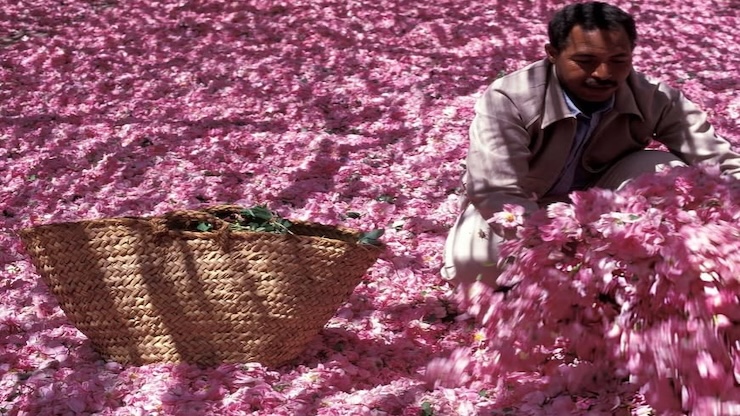
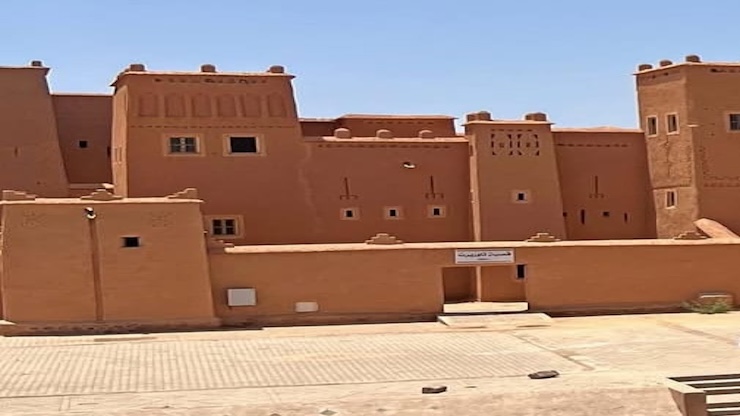
The road leaves the Dades Gorge and joins what is often called the “Road of a Thousand Kasbahs,” a stretch of the N10 highway dotted with ancient fortified villages built from rammed earth, many still inhabited, others crumbling back into the landscape. The course takes in the Rose Valley, a farming area centred on the Kelaa M’Gouna district, where fields of Damask roses are grown and harvested – mainly in spring – for use in rosewater, oils and cosmetics sold throughout Morocco and exported abroad.
Noon:
The drive continues to Ouarzazate, a town that has grown up around its role as a staging post for desert expeditions and, more recently, as a hub for the Moroccan film industry — the Atlas Film Studios here have provided the backdrop for many international films and TV series drawn to the region’s kasbah architecture and desert light. You can stop and explore the studio grounds, or just drive through and have a lunch break before continuing on if you have time.
Afternoon:
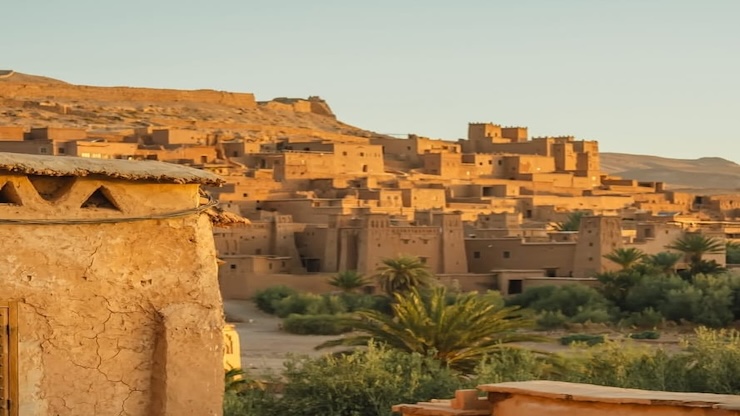
A short drive further on takes the group to Ait Ben Haddou, a UNESCO World Heritage Site and one of the best-preserved ksour (fortified villages) in Morocco, its layered clay towers rising above the Ounila River. Strolling its narrow passageways gives an up-close glimpse of construction techniques that have changed little over the centuries. From there, the final part of the day ascends the High Atlas through the Tizi n’Tichka pass, more than 2,200 meters, one of the highest paved mountain roads in North Africa, with switchback turns and lookouts over the valleys below before the road drops down into Marrakech at nightfall.
Day 6: Marrakech → Departure
Morning:
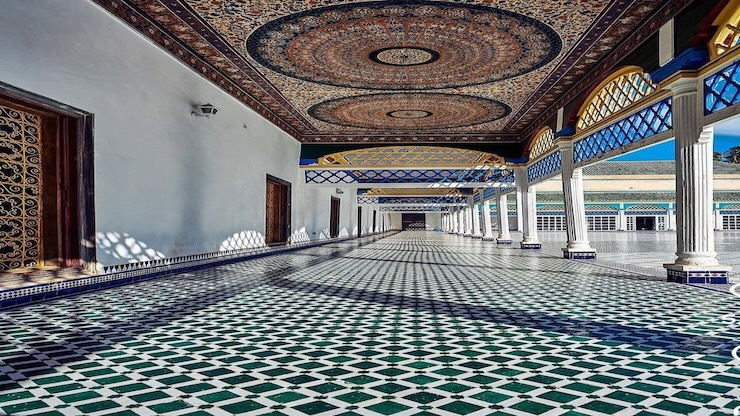
The last day begins in the heart of Marrakech, usually at Jemaa el-Fnaa, the city’s main square, much less crowded in the morning than it will be later on – a good time to see it before the food stalls, snake charmers and performers arrive later in the day. From there it’s on to the souks, passing through areas dedicated to leather, spices, lanterns and textiles, before arriving at Bahia Palace, a 19th-century home famous for its carved cedar ceilings, painted woodwork and a series of courtyards and gardens meant to make it seem much larger than it actually is.
Noon:
Midday takes us to the Ben Youssef Madrasa, one of the largest Islamic colleges in North Africa, with a courtyard lined with intricate zellige tilework, carved stucco and cedar wood – some of the most detailed examples of Marrakchi craftsmanship open to visitors. The group passes the Koutoubia Mosque, its 77-meter minaret a landmark and orientation point in Marrakech for centuries. The mosque itself is closed to non-Muslim visitors, but the gardens and exterior architecture are a major stop on a walk through the city.
Afternoon:
Flexible time until your flight departure. Depending on how much time you have remaining this may be more time in the souks for last minute shopping, a coffee in one of the cafés overlooking Jemaa el-Fnaa or simply resting up before the transfer. When the time comes Bahma Tours will organise a private transfer to Marrakech Menara Airport timed to your specific flight schedule to bring to an end the six-day route from Tangier.

What’s Included & Excluded
What’s Included
- Pickup from the airport and transfer to the airport
- Private transport in a [ air-conditioned 4x4 / minivan]
- Professional English speaking driver
- Fuel, road charges
- 5 nights accommodation as per the itinerary above
- Dinner For Day 3 and 4
- Daily Breakfast
- Licensed local guide for Fes and Medina
- Sunset Camel Ride in Erg Chebbi (1 Camel per Person)
Not Included
- Lunches and drinks
- Optional activities (quad biking, 4x4 excursions)
- Tips (optional but appreciated)
- Individual expenses
Useful information
- Best time to visit: March to May and September to November offer the most pleasant temperatures for the desert and mountain sections. July-August is very hot in Merzouga (often 40°C/104°F+). December-February brings cold desert nights.
- Physical difficulty: Easy to intermediate. The tour is primarily vehicle-based with walking tours in the medinas and short hikes at the gorges; no technical hiking required.
- Pace: This is a shorter version of the full Tangier to Marrakech route, so most days there is a substantial drive – travellers who like more downtime per stop may want to compare this against the longer 10-day version.
- The camel excursion is roughly 45–60 minutes each way at a walking pace.
- The Tizi n’Tichka pass can be closed and snowy in winter, so check conditions if you are travelling December-February.
- Weather: Desert days warm to hot depending on season; nights cold year-round, especially Nov–Feb. Pack them in layers.
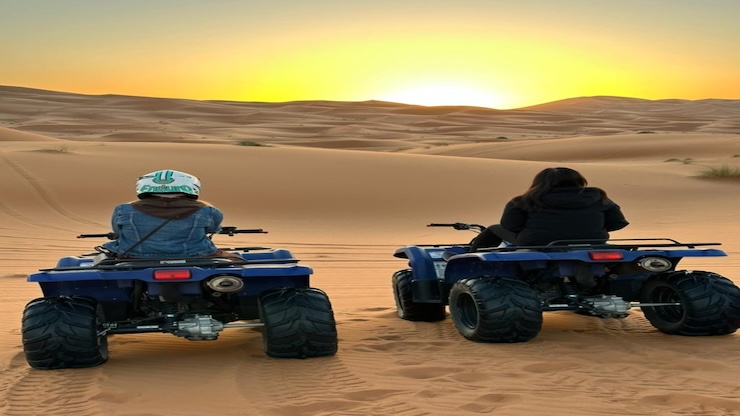
- Don’t want to go camel riding? 4x4 or quads to the big duns for the sunset can be arranged.
- Please mention any dietary needs when you book or just tell your driver on day one.
- Bring cash. small village stops and local lunch spots don’t take cards.
Booking
Ready for an unforgettable trip? Book now and pay later with ease! If you don’t hear from us soon, please feel free to contact us on WhatsApp at @@ we’re always here to help make your dream trip a reality.
Frequently Asked Questions
Is 6 days enough to get from Tangier to Marrakech and also see the desert?
Yes – this itinerary is designed to squeeze in a full night in Merzouga and the southern gorges within six days but that means longer driving days and fewer rest stops than a 10-day version of the same route.
What is included in the Fes guided walk?
The walk passes the gate of the Royal Palace, a city viewpoint, a ceramics workshop, the terrace of the Chouara tanneries and the university area of Al-Qarawiyyin with a local guide well versed in the medina.
Is this tour suitable for families or first time visitors to Morocco?
Yes. The pace is moderate, most sites are short walks rather than technical hikes and the route includes a representative mix of cities, desert and mountains making it a solid option for both families and first-time visitors.
Why is this tour not including Volubilis and Meknes?
The stops add scenic and historical value but also increase driving time; the 6-day option focuses on one core stop per region – Chefchaouen, Fes, Merzouga, and the gorges – to fit the full desert-to-Marrakech route into a shorter schedule
Fes to Merzouga drive - How far is it?
The drive from Fes to Merzouga takes approximately 6-7 hours in each direction, covering about 280 km one way through the Middle Atlas Mountains and the Ziz Valley.
Is desert stop only one night on this one?
Yes, this 6-day itinerary has one night in Merzouga not two on Bahma Tours’ longer 10-day route.
Is it possible to change the departure day around my flight time?
Yes, the last day of sightseeing in Marrakech is flexible depending on your flight and the airport transfer is timed accordingly.
Do you need to have experience to ride a camel into the dunes?
No experience necessary. You check in at camp by vehicle and then camels take you into the dunes for sunset at a slow guide led walking pace before returning to camp.
Does this route cover Ait Benhaddou and the Todra Gorge?
Yes to both of these. Todra Gorge is a stop on the way into Dades on Day 3. Day 4: Full visit to Ait Benhaddou, between Ouarzazate and the ascent to the High Atlas.
How does the desert camp look?
You’ll sleep in a traditional Berber tent with real beds.[Standard/Superior/Luxury] camps have [shared/private] bathroom facilities – please advise your operator of your preference when booking.
What do I really need to pack?
Layers, in particular – a warm layer for desert nights, something light for the heat of the day, and closed shoes for the walk in the oasis and the uneven paths of Ait Benhaddou. A headlamp and camera complete the basics.
What to wear on a desert tour in Morocco?
Light layers for the day, warm layer for cold desert nights, comfortable walking shoes, sunglasses, sunscreen, hat…
Do you want to ride a camel out into the dunes?
No experience required. You arrive at the camp by vehicle. You ride camels to the dunes for sunset at a slow, walking pace led by a guide, and return to camp. If you don’t want to ride, you can ask if there are other options for the sunset excursion.
A sleeping bag is not required for the desert at night.
No – the camps have full bedding, even in the standard tents.
Do you have vegetarian/vegan options?
Yes – just say so when booking or tell your driver/guide on the first day.
How to book and pay?
Your booking is secured with a small deposit, the balance will be paid in cash at pickup (euros, US dollars or dirhams) Full PayPal payment available with a 5% fee.