
5-Day Marrakech to Merzouga
Duration
5 Days
Starting Location
Marrakech
Ending Location
Marrakech
Overview of our 5 day Marrakech to Merzouga desert loop
Our 5 day Marrakech to Merzouga desert loop is a private trip with a local driver-guide and a flexible pace. Most desert tours only give you one night in the Sahara, just enough time to snap a sunset photo before you’re back on the road. This trip gives you two, with a full day in between to be there actually. And you don’t go back the way you came, but south through the Draa Valley, have a night in Agdz, then back over the Atlas.
Why choose Our 5 day Sahara desert tour from Marrakech
One desert night is never enough. You come, you see the sunset, you sleep and you’re gone again. A second night changes that, with nothing to do the day in between but explore. And instead of going back the same way you came, the return leg swings south through the Draa Valley, so you don’t see the same gorge and kasbah twice.
Highlights
- The Tizi n’Tichka pass through the High Atlas Mountains
- Strolling the ancient clay streets of Ait Ben Haddou
- Driving through Kelaa M'Gouna, the centre of Morocco's rose-growing valley
- Walking under the red cliffs of the Todra Gorge
- Two nights in the Sahara
- A visit to a Berber nomadic family, out in the dunes
- Two sunrises and two sunsets on the Erg Chebbi
- Another route back to Marrakech, through the palm groves of the Draa Valley
- An overnight in Agdz, a former stop on the old trans-Saharan trade routes
Our Itinerary
Day 1: Marrakech → Tizi n'Tichka Pass → Ait Ben Haddou → Ouarzazate → Dades Valley
Morning:
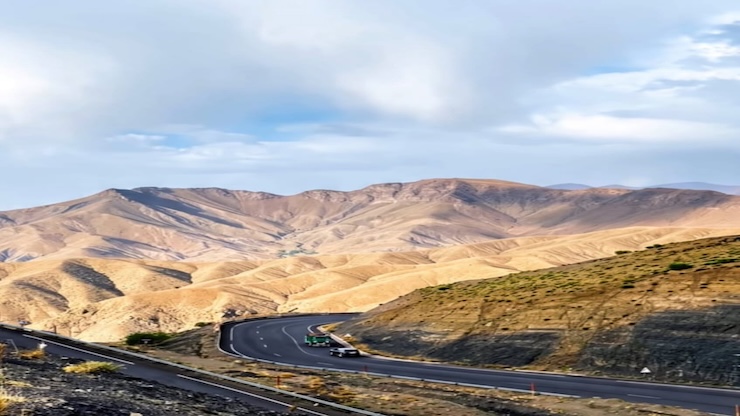
Pick up at your riad or hotel in Marrakech, then leave the city and head up into the High Atlas. The route to the Tizi n’Tichka pass rises through little Berber villages and terraced hillsides, and it’s worth stopping near the top for a view.
Noon:
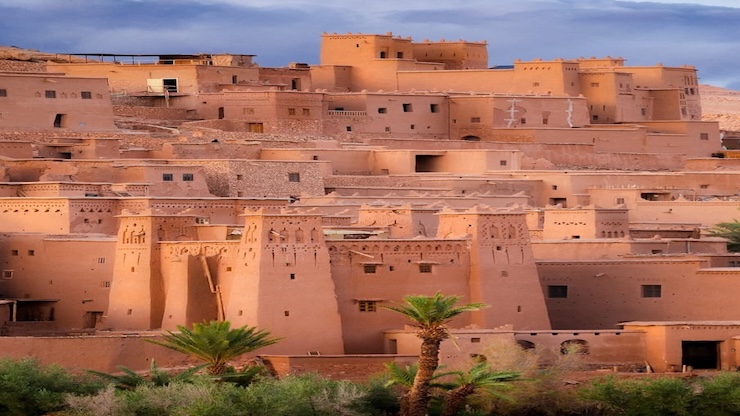
Shortly after you start the descent, you get your first sight of Ait Ben Haddou. It is an ancient fortified village built almost entirely of clay, and you will have time to walk up through it to the granary at the top. Lunch nearby afterwards, usually with a view back over the kasbah.
Evening:
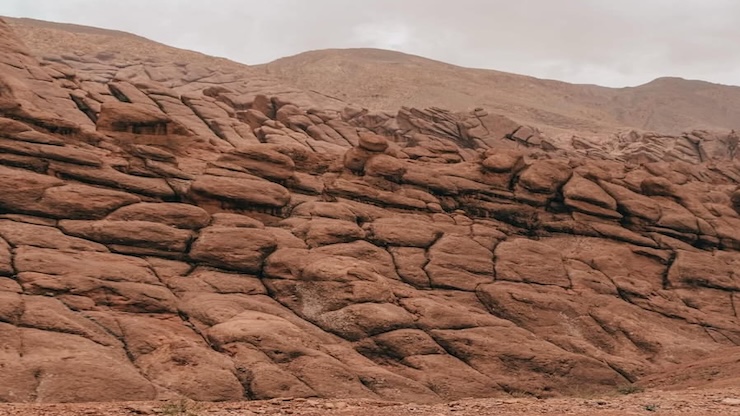
From here it’s on past Ouarzazate and through Kelaa M’Gouna, where the roadside is lined with rose fields, a striking sight if you happen to be travelling when the May harvest is on. You arrive in the Dades Valley late afternoon, with just enough daylight to see the “monkey fingers” rocks before checking in for the night.
Day 2: Dades Valley → Todra Gorge → Erfoud → Merzouga
Morning:
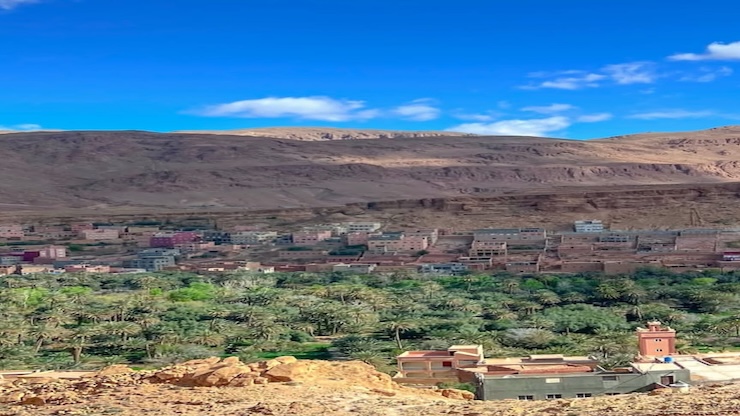
Breakfast and short drive to Tinghir and the Todra Gorge. This is one of those places you should slow down for. The canyon walls shoot up vertically on either side of a narrow river bed and walking through it feels a bit like standing at the bottom of a crack in the earth.
Noon:
Back on the road east, stopping for lunch as the landscape starts to open up and flatten out towards the desert.
Evening:
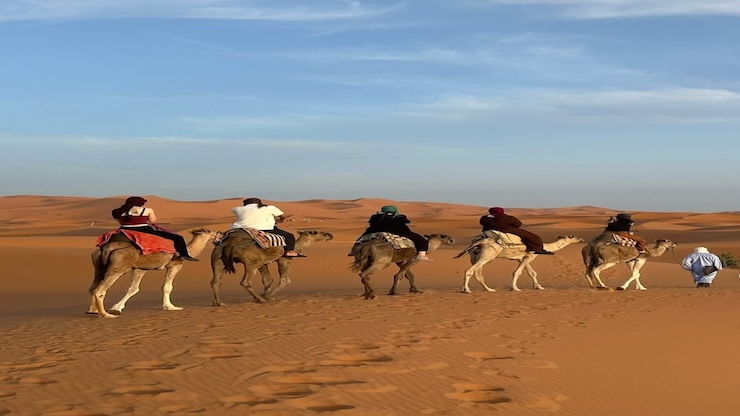
arrive in Merzouga and head straight to the camp. Your large bags stay behind in camp– camels can only carry a small backpack. After a welcome tea, you head out on camel from camp into the dunes for the sunset, then ride back for dinner and music around the fire. First night in the Sahara.

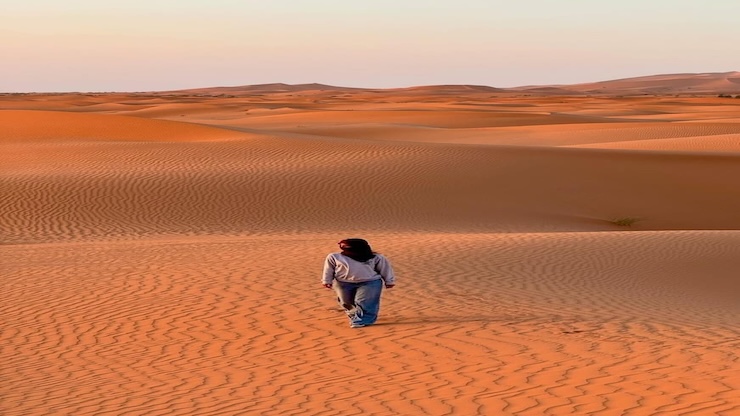
Day 3: Camp → Seasonal Lake→ Mefis Mine → Nomad Life → Camp
Morning:
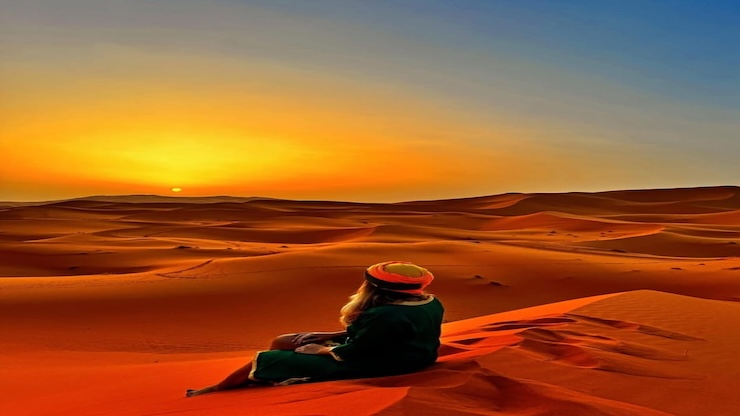
Watch the sunrise over the dunes, then back to camp for breakfast. Switch to a 4×4 for the day and our first stop will be a small oasis near the village and then seasonal Dayet Srij lake – when there’s water it draws flamingos and other migratory birds, with the dunes rising behind and mountains on the far side.
Noon:
Drive to the old Mefis mineral mines on the edge of the desert. Once mined for lead and other minerals, now a striking part of the Sahara to explore on foot. Stop for lunch at a small local place en route, then visit a Berber nomad family living in a traditional woven tent for a cup of mint tea and a glimpse into daily desert life.
Evening:
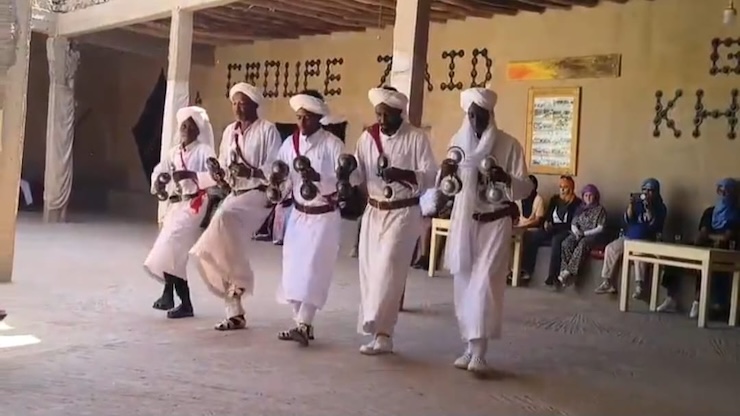
Return to camp, but not before a stop at the village of Khamlia to hear Gnawa music, performed by musicians who are descendants of the region’s historic trade routes. Return to Erg Chebbi for a relaxing evening – quads or walk on the dunes is easy to organise – before your second night in the Sahara.
Approximate travel time: 2-3 hours spread over the day

Day 4 - Merzouga → Rissani → Alnif → Agdez
Morning:
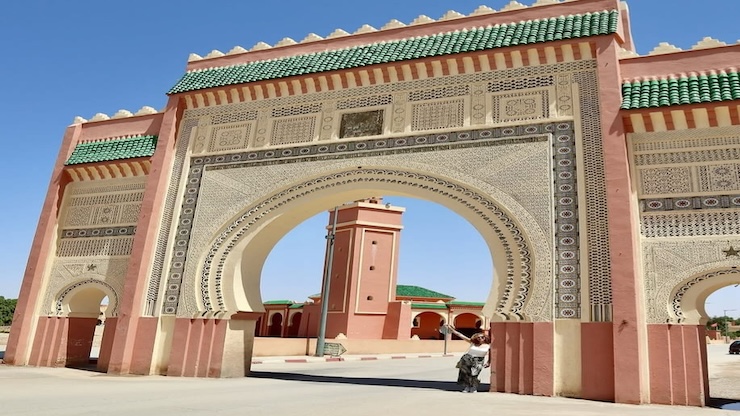
One last sunrise, breakfast and a last look at camp before you leave. You begin your drive south with a short stop at Rissani, an ancient market town with plenty of history.
Noon:
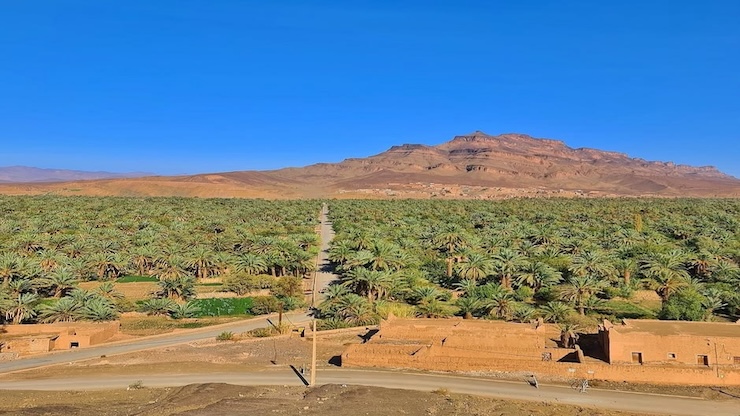
The road becomes bumpier through Alnif and Nkob before dropping into the Draa Valley – palm trees for kilometres, old kasbahs sprinkled along the way. Lunch overlooking the oasis.
Evening:
You’ll arrive at Agdz in the evening, a small town that used to be a stop for caravans crossing the Sahara. Time to chill before dinner.
Day 5: Agdez →Ouarzazte → Tizi n'Tichka Pass → Marrakech
Morning:
Breakfast. Drive north through the Draa Valley, more palm groves and kasbah villages, to Ouarzazate.
Lunch at Ouarzazate. Noon. If time permits, it is worth stopping at the Kasbah of Taourirt.
Evening:
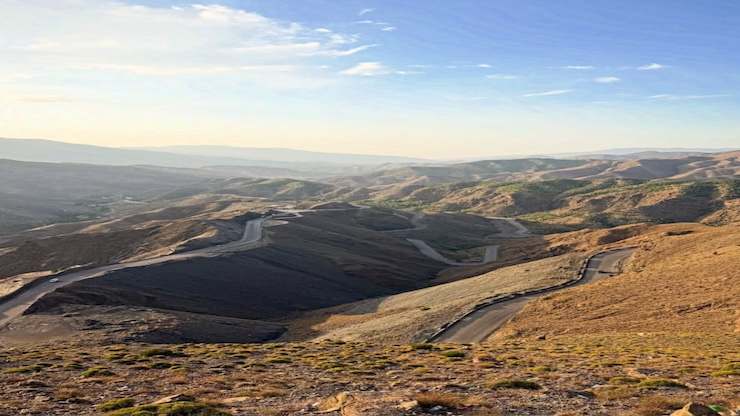
The final leg is back over the Tizi n’Tichka pass and down into the Marrakech plain, with drop-off at your hotel by early or mid-evening.

What’s Included & Excluded
What’s Included
- Private air-conditioned car
- English-speaking driver-guide for the entire trip
- Marrakech pickup & drop off
- One night in Dades Valley, dinner & breakfast included
- 2 nights in the desert camp including dinner and breakfast
- one night in Agdz with dinner and breakfast
- Camel rides at sunrise or sunset
- Fuel and toll roads
Not Included
- Lunches and drinks
- Entrance fees to monuments
- Optional activities (quad biking, 4x4 excursions)
- Tips (optional but appreciated)
Know Before You Go:
- Day 3 has minimal driving (2-3 hours total) but lots of stops — expect a longer day in the sun, so bring good shoes for walking and sun protection.
- The lake is seasonal, depending on rainfall. Dayet Srij is only filled with water for part of the year and if it’s dry your guide will change the stop accordingly.
- Desert nights are cold, even after a hot day – bring a warm layer regardless of the season.
- Bring cash. . Nomad families, small village stops and local lunch spots don’t take cards.
- Please mention any dietary needs when you book or just tell your driver on day one.
- Don’t want to go camel riding? 4x4 or quads to the big duns for the sunset can be arranged.
Booking
Ready for an unforgettable trip? Book now and pay later with ease! If you don’t hear from us soon, please feel free to contact us on WhatsApp at @@ we’re always here to help make your dream trip a reality.
Frequently Asked Questions: 5 Days From Marrakech
Why two nights in the desert, and not just one?
One night is not enough to get there and leave again. A free day in between a second night means you really get to spend time there, not just passing through.
Is five days too much? Would three or four do?
It is contingent upon what you want. Three days does the main highlights, but fast. This is for people who want to spend the full day in the dunes and see some new scenery on the way home, even if it adds to the overall length of the trip.
Why do we want to go back through the Draa Valley, when we came the other way?
You won’t see the same scenery twice. The Draa Valley is a whole other section of southern Morocco – long, green, and dotted with old kasbahs – and Agdz has its own history as a caravan stop.
How far is Marrakech to Merzouga drive?
The one way distance is approximately 560km, split over two days of driving with an overnight stop in the Dades Valley to break up the drive. Expect about 7 to 9 hours of driving (including stops) on the longest days.
Does the desert camp have a private bathroom?
Yes, with the “Luxury Camp” option – private toilet and hot shower en suite. Standard camps have shared facilities in the vicinity.
A sleeping bag is not required for the desert at night.
No – the camps have full bedding, even in the standard tents.
Do you have vegetarian/vegan options?
Yes – just say so when booking or tell your driver/guide on the first day.
Will we surely see the lake that comes and goes with the seasons?
Not always. Dayet Srij fills with water only at certain times of year, generally after winter or spring rains. When full it can attract flamingos and other birds, when dry your guide will substitute a nearby stop.
What to wear on a desert tour in Morocco?
Light layers for the day, warm layer for cold desert nights, comfortable walking shoes, sunglasses, sunscreen, hat…
Tiring trip?
Not really. The driving is well spaced over the five days, with no driving at all on day three – just walking and short hops by 4×4.
How to book and pay?
Your booking is secured with a small deposit, the balance will be paid in cash at pickup (euros, US dollars or dirhams) Full PayPal payment available with a 5% fee.